 by
by 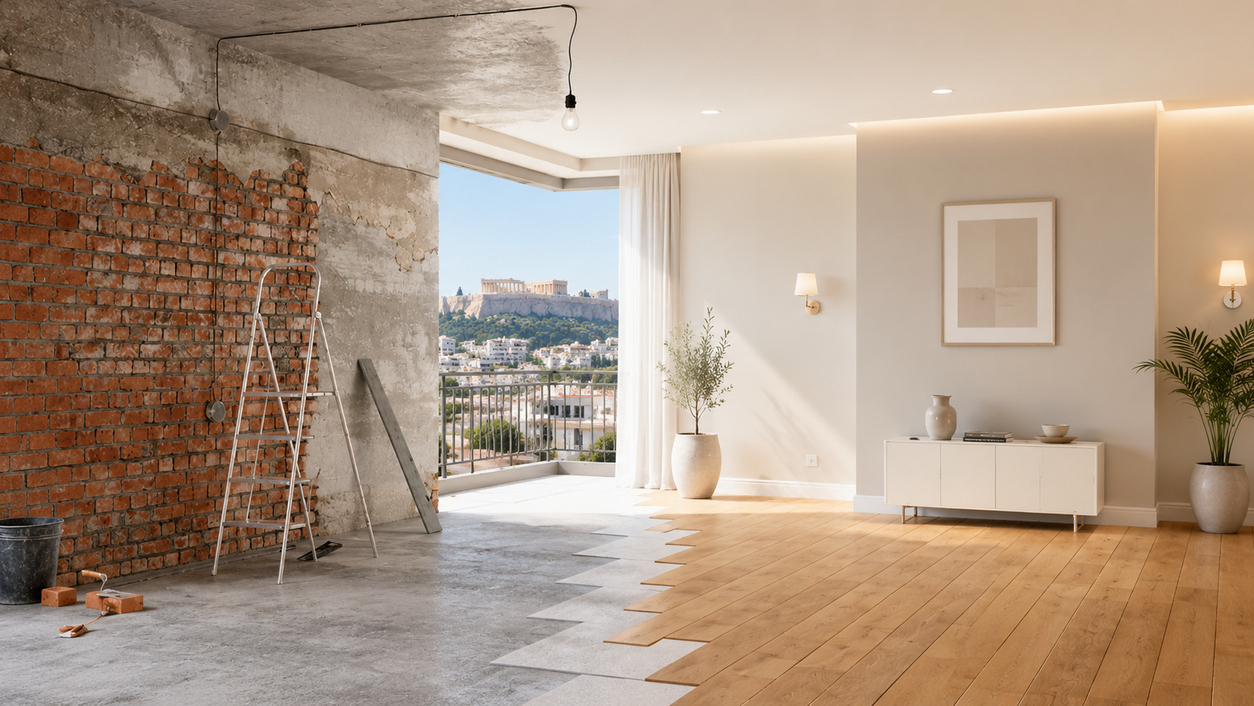
Buying an apartment in Greece can be a strong investment move in 2026, especially in Athens, Thessaloniki, popular coastal areas, and Greek islands.
However, the real profit is not created only at the moment of purchase. It is often created during the renovation phase.
A well-planned renovation can increase rental value, resale value, energy performance, and buyer appeal.
A poorly planned renovation can create delays, legal issues, cost overruns, and problems when the property is later rented or sold.
Below are the key points every investor should check before renovating an apartment in Greece in 2026.
1. Start With Legal and Technical Due Diligence
Before starting any renovation work, the investor should confirm that the property is legally and technically clear. This is especially important in Greece, where older apartments may have changes that are not fully reflected in the original building plans.
The investor should ask a civil engineer or architect to check:
- The original building permit.
- The official floor plans.
- Any previous unauthorized changes.
- Whether walls, balconies, storage areas, or internal layouts match the legal documents.
- Whether the apartment is part of a building with shared technical or structural restrictions.
In Greece, building permits and construction-related approvals are managed through the official e-Άδειες / e-Adeies electronic system, where engineers can issue and manage administrative acts for construction works.
This step is critical because a renovation that affects the structure, layout, façade, plumbing, or building systems may require approval before work begins.
2. Check Whether a Permit Is Needed
Not every renovation requires the same type of permit. Simple cosmetic upgrades may be easier to proceed with, while larger interventions may require a small-scale permit or a full building permit.
Typical works that may require technical review include:
- Internal wall changes.
- Bathroom or kitchen relocation.
- Plumbing and electrical upgrades.
- Window replacement.
- Façade changes.
- Balcony modifications.
- Structural interventions.
- Works involving scaffolding.
- Major energy upgrades.
A full building permit is required for construction works that do not qualify as small-scale construction, including building repairs, additions, demolition, excavation, backfilling, and other major works.
For an investor, the safest approach is simple: do not begin work before an engineer confirms the correct permit path.
3. Plan the Renovation Based on the Final Investment Strategy
Before choosing tiles, kitchen cabinets, or furniture, the investor should define the property’s final use.
The renovation strategy will be different depending on whether the apartment will be used for:
- Long-term rental.
- Short-term rental.
- Resale.
- Golden Visa positioning.
- Student housing.
- Executive rental.
- Holiday home.
- Personal use.
For example, a short-term rental needs strong visual appeal, durable materials, good lighting, smart storage, and an Instagram-friendly design. A long-term rental needs durability, low maintenance, energy efficiency, and practical layouts. A resale-focused apartment needs broad appeal, neutral colors, and a design that makes the property look larger, brighter, and easier to imagine as a home.
The biggest mistake investors make is renovating based on personal taste instead of market demand.
4. Prioritize Energy Performance
Energy efficiency is no longer a secondary issue. In 2026, it will directly affect monthly running costs, rental appeal, resale value, and buyer confidence.
Investors should examine:
- Windows and frames.
- Thermal insulation.
- Heating and cooling systems.
- Solar water heating.
- Heat pumps.
- Smart thermostats.
- LED lighting.
- Shading.
- Moisture and ventilation.
The official Exoikonomo 2025 program aims to improve the energy efficiency of homes by achieving primary energy savings of more than 30% and upgrading each residence by at least 3 energy categories.
Even when an investor does not qualify for a subsidy, the same logic applies: focus on upgrades that reduce energy consumption and improve the property’s long-term value.
5. Are There Subsidies for Renovation and Energy Upgrades in Greece?
Yes, there are subsidy programs in Greece for energy upgrades and, in some cases, renovation-related works. However, investors must be careful: not every buyer, property, or investment use qualifies.
Exoikonomo 2025
The Exoikonomo 2025 program supports residential energy upgrade interventions and is funded through Greece’s Recovery and Resilience framework. The program focuses on improving energy efficiency and reducing primary energy consumption.
Eligible interventions may typically include upgrades such as:
- Window and frame replacement.
- Thermal insulation.
- Heating and cooling system upgrades.
- Domestic hot water systems.
- Smart energy management systems.
Greek banks also provide financing connected to the program. For example, the National Bank of Greece describes Exoikonomo 2025 as supporting home energy upgrades with subsidies that may reach up to 100% for special beneficiary categories, while Piraeus Bank notes that supplier advance payment may reach up to 70% of the grant after the relevant approval process.
Exoikonomo – Anakainizo for Young People
There is also the Exoikonomo – Anakainizo for Young People program, which combines energy upgrades with renovation support. It is aimed at individuals born between 1 January 1984 and 31 December 2005 who have a property right in an eligible residence.
The official program page notes that the program provides renovation support for homes undergoing energy upgrades, aiming for combined energy, functional, and aesthetic improvements. Its completion deadline has been extended to 30 June 2026, according to the official program announcement.
Important Warning for Investors
Many subsidy programs are designed mainly for households, primary residences, vulnerable groups, young owners, or specific eligibility categories. A foreign investor, a company, or a buyer renovating purely for resale or rental income may not automatically qualify.
Before planning the budget around a subsidy, the investor should confirm:
- Whether the property is eligible.
- Whether the owner is eligible.
- Whether the apartment will be used as a primary residence or an investment property.
- Whether the required energy class improvement is achievable.
- Whether the application deadline is still open.
- Whether all invoices, permits, and technical documentation can be issued correctly.
The subsidy should be treated as a potential advantage, not as guaranteed income.
6. Get an Energy Performance Certificate Before and After
An Energy Performance Certificate, known in Greece as ΠΕΑ, is important for sales, rentals, and energy upgrade programs.
For subsidy programs, an EPC is typically needed before and after the energy intervention to document the improvement. Energy certificates are also required for property sales and rentals in Greece.
For an investor, the first EPC helps answer an important question:
Which upgrades will increase the property’s value the most?
Sometimes the best return comes from windows and heating systems. Other times, it comes from insulation, solar water heating, or better cooling. The answer depends on the apartment, the building, the location, and the target buyer or tenant.
7. Build a Realistic Renovation Budget
A professional renovation budget should include more than just visible work. It should include every cost category that affects the final investment return.
The investor should calculate:
- Engineer or architect fees.
- Permit costs.
- Legal and technical documentation.
- Demolition and removal.
- Electrical works.
- Plumbing works.
- Heating and cooling.
- Windows and insulation.
- Bathroom and kitchen.
- Flooring.
- Lighting.
- Painting.
- Furniture and equipment.
- Professional photography and video.
- Contingency budget.
For older Greek apartments, a contingency budget is essential. Hidden problems are common: old pipes, weak electrical installations, moisture, poor insulation, uneven floors, or undocumented previous changes.
A safe investor mindset is to expect surprises before they happen.
8. Do Not Renovate Only for Beauty
A beautiful apartment is not always a profitable apartment.
Investors should renovate for:
- Higher rental income.
- Faster occupancy.
- Lower maintenance.
- Better resale positioning.
- Stronger online presentation.
- Better energy performance.
- Better buyer confidence.
For example, a premium marble bathroom may look impressive, but if the target market is long-term rental, durable surfaces and easy maintenance may produce a better return. In a short-term rental, lighting, layout, photography, and the presentation of sea or city views may matter more than expensive materials.
The goal is not to create the most expensive renovation. The goal is to create the most profitable renovation for the target market.
9. Use Design to Increase Perceived Value
In 2026, property presentation is strongly visual. Buyers and tenants often make decisions emotionally before analyzing the details.
A renovation should focus on:
- Natural light.
- Open, clean spaces.
- Warm neutral colors.
- Modern bathrooms.
- Functional kitchens.
- Built-in storage.
- Smart lighting.
- High-quality photography.
- Video walkthroughs.
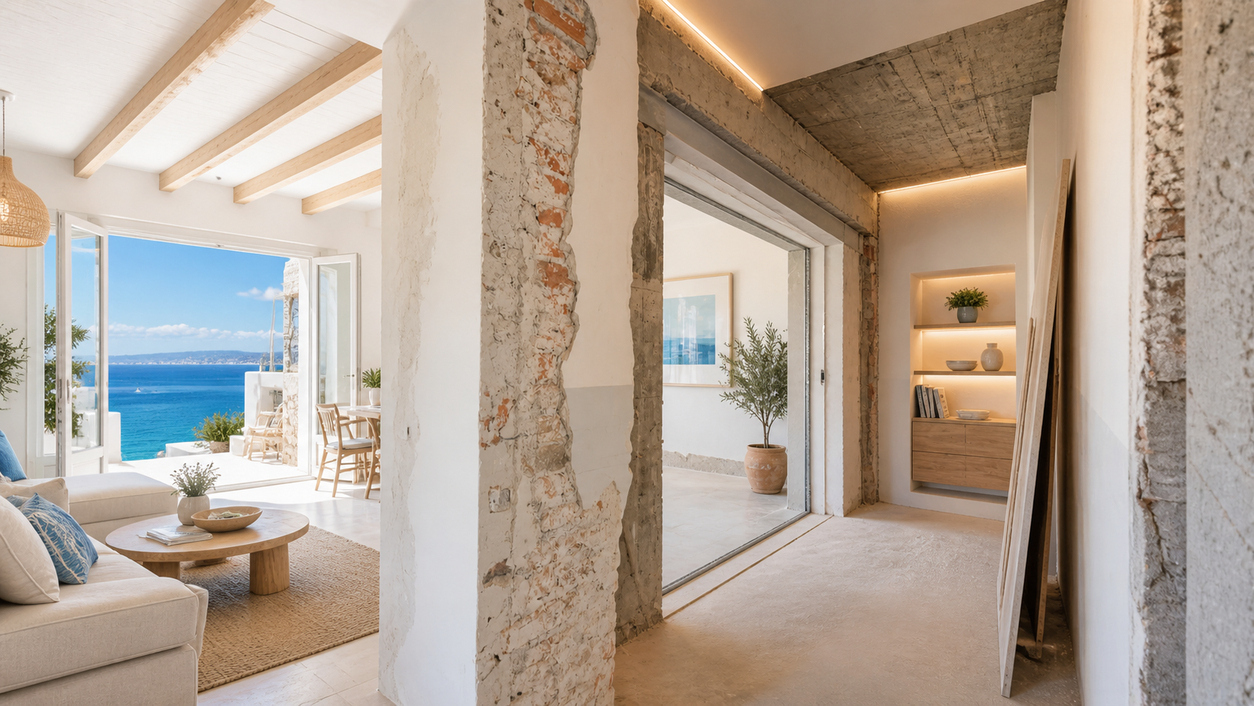
- Before-and-after storytelling.
For international buyers in particular, the property must feel safe, modern, and easy to understand.
A strong visual identity can make a renovated apartment stand out in a crowded market.
10. Work With the Right Professional Team
A serious renovation in Greece should not be managed casually.
The investor may need:
- Civil engineer.
- Architect.
- Interior designer.
- Electrician.
- Plumber.
- Contractor.
- Lawyer.
- Accountant.
- Real estate advisor.
- Energy inspector.
This is especially important for foreign investors who may not be in Greece during the renovation. A local team can control quality, timelines, documentation, and communication.
The right team should not only ask, “What do you want to build?”
They should also ask, “What is the investment goal?”
Conclusion
In 2026, renovating an apartment in Greece can be a powerful investment strategy, but only if it is planned correctly. Investors should not start with decoration. They should start with legal checks, technical due diligence, permits, energy performance, subsidy eligibility, and a clear investment plan.
Yes, there are subsidy programs for renovation and energy upgrades in Greece, especially through energy-efficiency schemes such as Exoikonomo. However, eligibility depends on the owner, the property, the residence’s use, deadlines, and technical requirements.
A successful renovation is not just about making an apartment look better. It is about making the property more valuable, more efficient, easier to rent or sell, and more attractive to the right buyer or tenant.
For investors, the best renovation is the one that combines legal security, technical quality, energy performance, smart design, and a clear return-on-investment strategy.



Join The Discussion